Showing posts with label goals in retirement. Show all posts

Wednesday, December 1, 2010

My Reading Life: Time for the Pursuit of Personal Passions


When I think back upon my earliest years growing up in the small town of Shepherdstown, West Virginia, my most vivid memories are of walking with one of my sisters or my brother the three blocks to the town library. In the early fifties, parents could allow their children to walk unaccompanied without fear of abduction or another equally horrendous fear of parents today. I walked freely, carrying my borrowed treasures under my arm, taking in the happy sounds of the rippling brook that ran parallel to King Street, and looking forward to the new treasures I was sure to find in my beloved library.

The library in Shepherdstown was located literally in the center of the small town with a population of just about one thousand people. Located at the intersection of the main street, German Street, so named for the original German settlers, and King Street, the library was directly across from the entrance to the small college in town, and sat right in the middle of King Street, so that all traffic had to go around the library, creating a miniature traffic circle, with the library in the middle of the circle. In my child’s eyes, the library had to be the most important building in town; otherwise, why would it occupy this most central spot? Upon entering what looked like a two story house, I experienced the feeling of being welcomed into the living room of a kind, generous neighbor whose doors were always open and who was willing to share of her riches with all who entered.

This combined anticipation of adventure and discovery along with the very real sense of comfort and safety that I experienced inside the rooms of the library are the most likely source of my life-long love affair with reading. Books were my magic carpet. Through the avenues of hard-bound volumes of sheets of paper covered with words, sentences, poems and stories, I was able to venture beyond the borders of life as I knew it into the lives of people and places that inspired a great sense of curiosity and ambition that I may never have known otherwise.

I still own a copy of my all-time favorite children’s book, Madeline. The opening lines of the story, “In an old house in Paris, all covered with vines, lived twelve little girls, in two straight lines,” along with the picture of those twelve little beds in the orphanage in Paris are forever engraved on my mind. As I grew older, I was drawn to read biographies. I remember in particular a series of orange hard bound biographies of famous people such as Helen Keller, Abraham Lincoln, Daniel Boone, Davy Crockett, Jane Adams and Marie Curie that made me think that I too could make some great contribution to the world. Then, I discovered the Nancy Drew series, about the strong-willed teenager who allowed me to join her in the world of mystery and intrigue. As a middle schooler and high schooler, my tastes inevitably changed. Does any girl forget her first reading of Gone with the Wind? Or The Diary of Anne Frank? In high school, I remember being one of the few students in my class who was excited to get a new reading assignment in English class. How could reading the story of Hester Prynne in The Scarlet Letter ever be considered as work, I wondered.

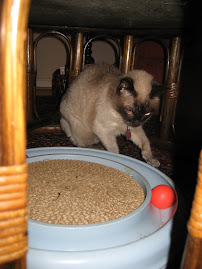
Now, four decades later, in my retirement, I am in the position of being able to partake in the sheer luxury of reading whatever and whenever I please. Whether it be sitting on the chaise lounge on my back porch in the summertime listening to the chirping of the birds or the humming of the neighbor’s lawn mower, or curled up in the folds of a warm comforter in winter, reading affords me the opportunity to do two things I love at the same time, i.e., to immerse myself in a great story and to spend quality time with my 17-year-old Siamese cat.. Miss Coco is always right there in my lap, sometimes sitting directly on the pages of my book, or otherwise obstructing the line of vision for reading, requiring frequent cuddling and gentle readjusting of the seating arrangement in order for me to get to the end of an episode or chapter.

In the past two years I have read dozens of books, mostly fiction. One of the many goals I set for myself in my retirement was to catch up on all the novels and movies that I had not had time to read or see while I was working full-time in a profession that demanded nearly as much time outside of the regular work-day as during the work-day. Why am I so passionate about my books? Is it the pure distraction and escapist pleasure derived from engaging with real or fictional characters who find themselves in any of a myriad of true to life conflicts or moral dilemmas which probe the depths of human nature? Or is it because the act of reading, and really engaging with a book, keeps the mind active, one of the most frequently cited secrets to fighting aging? It’s probably both, and then, the icing on the cake is the opportunity to follow up what some call a solitary pastime with a group of like-minded folks, in my book clubs, with lively discussions and sharing of reactions to the reading, therefore furthering the insights into the book and simultaneously, forging new friendships.

I realize that everyone is not as enamored of reading as I am, but most of us have a secret passion that had to be set aside during the thirty or more years of working to earn a living. What was your passion? Have you taken advantage of this phase of your life to pursue a long-repressed pursuit? Or have you ventured out into new areas of self-discovery that you didn’t even know existed since your retirement? In either case, isn’t it great to have lived long enough to pursue these self-indulgent pleasures or equally creative new opportunities for self-discovery?

Monday, October 19, 2009

Valuing the journey as well as the destination OR "What do the ideas of time management and sailing have in common?"

In my last two postings, I expressed frustration over the fact that I haven’t made any demonstrable progress in reaching my dream goal for retirement, i.e., writing a book. For today, I think instead of beating myself up for not making the progress that I would like to have made, I need to take a more positive approach and look at what I have accomplished since June 30, 2008, the date of my retirement. I also need to get real about how I want to live my life. Again, I return to the question: What does it take for me to feel that I am living a fulfilling, meaningful, life?

To review, my initial goals for retirement were to engage in activities that challenged me cognitively, physically and socially. I also included the concept of “engagement” in a cause that is bigger than myself as being necessary to keep me focused and centered. I am very satisfied with my involvement in book study groups that I have joined. They are providing me with both cognitive challenges and social opportunities and I have been thankful for this new opportunity to share and discuss literature. I even served as facilitator at the latest one on John Updike’s Terrorist. The session was a good one and it was clear that my skills as a meeting facilitator, learned and cultivated through many years of leading teacher study groups, combined with my passion for John Updike produced an environment where everyone was comfortable and felt empowered to speak up to share their reactions. I was on a high. I felt I was in my element. What does this tell me about myself?

I have made progress on my exercise / physical fitness goals. In terms that can be measured, I have managed to shed a few pounds and have firmed up important muscle groups. I am able to execute the first basic form of Tai Chi. I continue to remain informed about nutrition and take deliberate steps to buy and consume only those foods which are rich in nutrients (and which my son the nutritionist would approve of.) In addition to my book study groups, I have other outlets for social engagement and volunteerism which keep me involved with friends and provide an emotional support system.

My commitment to reading groups as my primary vehicle for the pursuit of cognitive challenges derives from two underlying desires, the first being to rediscover the pure joy of sitting down with a good book and entering that other world inhabited by people and situations which reveal universal themes that I can relate to. This is where I find so much real pleasure. Time spent in reading is always time well spent. I am continually learning and growing when I read.

The second reason for my determination to be an active participant in my book study groups is to provide myself with an avenue for learning more about what makes good literature. I want to read for pleasure—and then some. I want to read so that I can learn how to write. In that regard, in addition to reading novels, I have researched the writing process and the publishing industry. I love that classic adage written on the classroom walls in 90% of the schools in the division where I worked for 14 years: first learn to read; then read to learn. After all those years of reading to learn how to be a better teacher / how to be a better leader / how to collect and use data to improve instruction, I am now reading to learn how to be a writer. What a treat!

I have always been somewhat impulsive and impatient about things that I really want to accomplish. I am susceptible to severe cases of tunnel vision and am able to block out everything that doesn’t directly relate to my goals. Maybe I need to rethink my attitude about where I’ve been and what I’ve been doing. Haven’t I been working toward my goal of writing a book by reading and discussing what I’ve read? All of the book studies that I have donehave in fact been leading me up to the point where I will be better prepared to take the first critical steps of writing.

As retirees, when we set goals for ourselves, it doesn’t mean that they have to all be accomplished by tomorrow—or by next week—or next month. There is no reason to be as driven as we were when we were working. Instead, what we have identified as goals should serve as a sort of compass, a general direction that we want to follow.

To borrow some sailing metaphors from a dear friend, let’s imagine that we are cruising on our sailboat, and we have plotted a general course which will lead to our ultimate destination. Does that mean that we can’t take an occasional side trip to explore a newly discovered cove or marina? Or that we can’t just stop for a day, drop anchor, and enjoy the air, the sun and the water? Aren’t we supposed to enjoy the actual journey? I learned long ago that success and happiness are not measured by being the first to cross the finish line. Success and happiness are measured by how well we live every day and by enjoying the ride every minute as we steer toward our desired destination. For me, this credo should translate into turning every moment that I may perceive as a “distraction” from my long term goal of writing a book, e.g., activities such as meeting friends for lunch or going to the gym, into moments and incidents which will in the long run enrich my life and also broaden my perspective. This is indeed the gift that retirement offers.

Saturday, September 19, 2009

Retirement--a POWERful Experience in Rewiring


In a recent AARP Magazine article, Yakov Smirnof, comedian and writer, points out that in retirement “you are approaching a time in life when you can not only choose the games you wish to play but also write your own rules and be a winner every time.” (May-June, 2009, p. 18)

Wow, that’s a liberating thought, isn’t it? Life without rules. Do what you want. No more following directions and fulfilling everyone else’s expectations. For the majority of our lives, we have been following rules and fulfilling expectations that were set for us, first by our parents, then by our families, and then by our jobs. There didn’t seem to be much time for anything else. In fact, time was a most precious commodity and there was never enough to go around.

Do you know what a fuse box and retirement have in common? Let’s examine for a minute these two very different concepts. What is the purpose of a fuse box? With apologies to my electrician friends, in novice terms, let me just say that the fuse box brings power into your home and then distributes it to the various sites where it is needed. Wires connecting the fuse box lead directly to kitchen appliances, electronic equipment, lights, cooling and heating systems, among other things. Some appliances need more powerful fuses than others, and the electrician is the expert who selects the appropriate fuses and hooks up the wires as needed.

Think of yourself as a source of energy, similar to the panel of fuses in your house. For the past thirty (plus or minus) years that you have been working, you divided up your energy among the various demands of your life. If, like me, your priorities centered around family and work, the majority of your energy went toward satisfying the needs and demands of those two areas of your life. You as an individual were wired for certain behaviors and recurring tasks. Now, take away that job, take away those children who have probably moved out, and you are left with a very large source of energy that has nowhere to go. It’s just sitting there unused.

If this is the case, it would appear that a new retiree might need a little rewiring. Just as a brick and mortar building needs to be rewired periodically to update all of the electrical connections as a house is modernized, we often hear this word “rewiring” used to describe a person who is going through a major life change and who will need a whole new set of skills and renewed perspectives to cope with the future that he / she is facing.I like this metaphor to describe the changes that I have been experiencing during the past year. For the majority of my life, my priorities were family and work. The majority of my electrical circuits had their origins in the fuses governing these two areas of my life and provided the power for me to perform the functions needed to successfully cover those areas of my life. However, the hard-learned skill-sets, talents or modes of thinking that I have cultivated for 34 years and that earned me a certain degree of success and a reputation for reliability in my work may no longer be needed or even applicable for the decisions that I will be making today.


As a parent and an educator, there were many rules I had to live by. These rules determined to a large extent the way I was wired. They guided my choices and the way I carried out my responsibilities. Be strong. Be a good role model. Be fair. Be consistent. Be organized. Be patient. Be generous. Be knowledgeable. Use your time wisely. Be enthusiastic. Be creative. Be a good listener. Be a team player. Do your best.


At first, the thought of entering a realm of “no rules,” creates a sense of excitement and we think this thing called retirement should be a cake walk! If there are no rules, I can’t make any mistakes, right? Well, imagine a classroom teacher coming in on day one of school and announcing to her students that there will be no rules in this class this year. Can you imagine the chaos and the uncertainty?

In fact, being rewired for a system where there are no rules puts a greater responsibility on ourselves and makes us face our own set of values. All of a sudden, instead of living up to everyone else’s expectations for ourselves, we have only to live up to our own. But do we even know what they are?If never before, retirement is a time for a thorough re-examination of our own priorities. Retirement is a gift that we have earned. It is the gift of rest, recuperation, reflection and recreation. It is a time to explore, discover, listen, watch, and experiment. For me personally, I have asked myself things like--What makes me tick? Am I someone who needs constant interaction with other people? Or do I thrive on the quiet times sitting cozily on my sofa with my cat and dog nearby reading the latest selection for my book club or watching a classic movie on TCM? What will it take for me to feel good about myself today? What does it take for me to feel good about myself on any day? What are my own standards for happiness? For success? For fulfillment? Are there some areas of my life that have been left “in the dark” because of the responsibilities I had but that could still be there waiting to be brought into the light?

What about taking care of myself physically? Don’t I owe it to myself to stay healthy so that I won’t be a burden to my children or my siblings in later years? What about the greater role that I could be playing in my community? What skills do I have that might be helpful to someone else? What are my dreams? Do I have the drive and commitment I’ll need to attain those dreams?


What about you? Have you thought about rewiring for retirement? What will guide your thinking and your actions as you move forward into your sixties, seventies, eighties and beyond?

Tuesday, September 8, 2009

Yakov Says . . . Make Your Own Rules


In response to a question from a reader who expressed terror at the prospect of a future after retirement and the lack of structure provided to her life by work and raising a family, Yakov Smirnoff, comedian and writer, wrote the following in the AARP Magazine (May/June 2009, p. 18):

Here is the short version of the question:

“I keep obsessing about the inevitable day when I’ll have no job responsibilities. I feel as if my life is shrinking. How do I find my passion again?”

“You are approaching a time in life when you can not only choose the games you wish to play but also write your own rules and be a winner every time. You’ll finally have the time and the freedom to experiment and play, with hobbies and new occupations that interest you. What do you really love to do—I mean, besides your job? What energizes and excites you? Even though you may still have quite a few working years left, it’s not too early to get a jump-start on working toward making yourself a winner.”

Yakov Smirnoff has captured so well in this short answer a healthy and hope-filled perspective toward retirement that I happen to share with him. This is just one sample of the type of article available to you as a member of AARP. If you haven’t already discovered the wealth of information made available by AARP (American Association of Retired Persons), I suggest that you go to your computer right now and look it up on the internet to find out how to join. Like me, you might be thinking—I’m not that old! How can I be ready to subscribe to AARP? Isn’t that something for my parents or my grandparents? Well, guess what friends. You are your parents! If you are following this blog, chances are you are old enough to qualify for membership in AARP. Check it out. http://www.aarp.org

Saturday, August 22, 2009

Breaking Free


This is my second posting. I have had two people visit my site, thanks to my announcing it on my Facebook page-- my son who is nowhwere near the age of retirement and my friend Pat who is at that age but is still working and making a great contribution to her field. So let me start by saying that all of us can have useful experiences to share regarding this idea of retirement, whether or not you have already retired. My son, who is very wise for his 30 + years, may even have some gems of wisdom to share with us older women. (His retirement gift to me was a great book: Smart Women Don't Retire: They Break Free by Gail Rentsch). So, let's just say that I welcome all viewpoints on the topic of this blog.

Most articles or books that I've read indicate that in order to have a successful (and I define successful by meaningful and fulfilling) retirement, there are three areas that we need to address and in which we need to remain active. These areas are cognitive challenges/ continual learning; physical activity or wellness; and social interactions. These three areas will be the focus for my postings, although I reserve the right to ramble from time to time.

When I retired, I was truly desperate for time to myself; time without the burden of overwhelming responsibilities from work; time where no one other than myself was setting expectations for me. I was ecstatic, euphoric, elated--all those good words. It doesn't mean that I hated my job or the people I worked with. It just means that I was over-burdened and no longer was happy finding my main fulfillment in life at work. I knew there was more to life and that I had other skills and talents that could also be cultivated, but I needed time. It was a major life-change that I made very comfortably.

I had three big goals that I wanted to pursue when I retired. I was passionate about them and had no qualms whatsoever about how I was going to spend my time. The literature also says that it's a good idea to have some idea before you retire about how you want to spend your time. This seems especially important for men who find most of their personal identity through their work. My goals were to read as many books as I could (and to find some book clubs in which to discuss them); to work on my physical fitness; and to begin examining the craft of writing. In the process, I was also hoping to meet new people who shared my interests. I also made a vow to myself that I would not volunteer for any new committee or leadership roles in any of the clubs that I am a member of. I've been there done that and I made up a new word to describe myself: commitophobe.

So far, in 13 months, I have read approximately 25 books, joined two book clubs, lost 10 pounds, and read multiple books and magazines about the craft of writing. I have tried to do regular journaling also but have not been as regular about this as I should be. I don't like to be too self-disciplined and make myself do the same thing every day. That's too much like work. I am still indulging myself in the freedom of the unexpected urge--catching a classic movie in the middle of the day; spending quality time with my aging dog and cat; sitting on my front porch and doing a cross-word puzzle; or even doing a little housework.

As I am now embarking on year 2 of my retirement, my goals are changing just a bit. But more on that the next time. Please let me know your thoughts on any of the subjects I've mentioned in this posting.