Thursday, July 29, 2010

P. T.-- My New Favorite Place To Be: A Sign of Aging?

I am spending lots of time these days at the physical therapy office. I keep asking my therapist if my injuries are the result of wear and tear, i.e., aging, or if I injured myself in some way. He sort of squinches his eyes and starts talking real fast, partly avoiding the question and partly saying that it's a little of both. Although the majority of the patients in the PT office are "seniors," there are also a good number of young adults who are suffering sports injuries. Our bodies weren't meant to run at 100% for 100 years--at least that's what they tell me. The thought of developing a chronic condition which may limit my future activities is very troublesome to me. Is this just one more of the things we have to learn to accept as we age gracefully?

I'm in the throes of bone spurs and achilles tendonitis, caused by inadequate stretching of my calf muscles, aka, the gastrocnemius, before walking. My friends and I always stretch before walking but somewhere along the way I must have forgotten this one really important combination of muscle and tendon. The lack of proper stretching has caused the Achilles tendon to pull on my heel bone, gradually tearing away calcium deposits and developing a bone spur.

As I do my uniquely prescribed regimen of exercises for strenthening and stretching, I love to watch all the other clients there and guess what their injuries are. This is my third go-round in the experience of physical therapy. I have been diagnosed with frozen shoulder twice and a pinched sciatica nerve once. Those were back when I was much younger, say in my 50's. I have seen more ways to move the body and to manipulate joints and bones and muscles in all my visits to the PT office than I ever knew existed. Last week, when I saw a high school student athlete sliding back and forth on what looked like a very small ice-rink (in reality it was a very slick piece of some kind of synthetic fiber,) I prayed secretly that Scott would not say, "You're up next!" I'm sure I would have broken more bones, stretched more tendons, and torn more ligaments in the course of the exercise instead of healing any existing injuries.

At first, as a patient, you think to yourself, "oh my gosh, everyone must be looking at me. I must look so silly with my butt up in the air like this!" But after three or four visits, you realize that everyone is focusing on his / her own stretches and not paying much attention to you. Or else they are just as embarrassed as you are and they are avoiding eye contact! So far, I have found everyone--patients and therapists and therapists' assistants--to be extremely pleasant and helpful. What a world of knowledge they possess. I am in awe everytime I hear a new muscle or body tissue mentioned. Actually, I am in awe of the human body. Having an injury, no matter how small, causes one to develop new respect for the complexity of the body that we call our own.

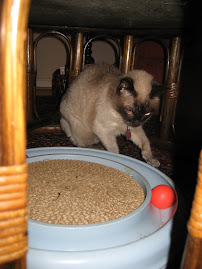
The one part of the therapy session that is most pleasing (warning--true confessions ahead!) is when the therapist massages my ankle and calf. Even though it sometimes hurts, the pleasure of experiencing the sense of human touch is healing in itself. Plus, to speak quite frankly, I don't have much else going on in my life right now in the category of touching, so it's either from the therapist or my cat where I'm getting my strokes! (no pun intended)

Right now my goals are to be able to walk moderate distances pain-free in Arizona and at the Grand Canyon in September. Wish me luck! I may not be particularly athletic or smart, but I am determined!

Does anyone else have experience with bone spurs and achilles tendonitis? Tell me there is a light at the end of the tunnel!

Saturday, July 24, 2010

Going Back to Work Redux


Newsflash! Breaking news! Margaret is considering going back to work!

Well, it’s only for six hours a week—but it’s teaching—and we all know that for every six hours of teaching, it is necessary to put in at least double the number of hours for preparation and grading of papers. Add in the mandatory office hours and we have roughly the equivalent of a half time job—20 hours a week, at the minimum.

Some of you may be thinking to yourself right now, didn’t she say in an earlier posting that she would never go back to the work environment? Isn’t this the lady who preaches ad nauseum about finding out what makes you really happy and then doing it? Is this the same person who says “indulge yourself, you’ve earned it!” In my posting in March on the topic of returning to work, written after a brief three-week assignment in the public schools, I wrote the following:

“ . . .I wouldn't trade my retirement for anything.”

I also wrote, “. . . if you are considering a return to the work environment, I encourage you to think long and hard about your long term goals and the pro’s and con’s of giving up what you now have as a retiree.”

I have not changed my mind about what I said then. I wouldn’t trade my retirement for anything. And I have carefully examined the pro's and con's of giving up the lovely wide-open schedule that I am now enjoying.

First, the con's. Throughout these first two years of my retirement, I have embraced the joys of being the master of my own schedule and the thrill of spending a day doing nothing more challenging than doing some writing or reading, watching a classic movie on TCM and mowing the grass, if that’s what I chose. If some of the time was wasted, I figured that I had earned the right to do so. Nothing has made me happier than being able to wear jeans / shorts and a tee-shirt every day of the week. With this decision to return to a part-time teaching job, I will now have a schedule to adhere to. I won't be free to attend every lecture of the Elder Study Program that I have joined at the university. I will have to be more deliberate in planning times to go to the Y to get in my work-outs or walks with my girlfriends. I have thanked God every day for this two year respite from the pressures and stress of my full-time job. But now, I'm ready to take on the obligations of a slightly more rigid schedule because of the benefits that I see accompanying it. And, right now, it's only for one semester. If I don't like it, I won't do it the second semester. It's not a life or death decision. I like to think of it more as an “experiment in living.” This time last year I would not have been ready to take on this commitment. But now, I’m ready.

My primary goal in retirement has been to practice the craft of writing. Along with my regular monthly activities such as reading clubs, church dinners for the homeless, and writing club, and my daily tasks such as gardening and exercise, the time required for teaching will definitely cut into my writing time. But in a paradoxical sort of way, it is possible that taking this time away from writing just might give me more of a sense of urgency and might make me apply myself a bit harder to my writing projects. I will explain this more later.

The positive reasons for accepting this challenge are varied. I always loved teaching French. What I didn’t love were the bureaucratic hassles and all the non-instructionally-oriented paper work associated with the job. As an adjunct in a university, I think those two areas should be minimal to non-existent.

In regard to my writing, how can this job be a positive? Truthfully, I have been disappointed in myself in the amount of writing that I have produced this year. In order to write well, one needs to spend time writing every day. Picture me and the computer and my imagination sitting together multiple hours every day. This is a rewarding but solitary way to spend a life. However, it is also true that writers need a rich variety of life experiences to provide ideas and inspiration for writing. This solitary vs. engaged lifestyle dilemma is one of the great contradictions of the writing vocation. Engagement is the juice which powers our writing--the energy source which fuels our production. This week, for example, I am super- charged and full of ideas for blog postings and for stories. I can’t help but wonder if it is because I just spent a very hectic two weeks helping to plan activities and entertain 60 French people who are visiting my town? Was it the break from writing that is giving me renewed energy?

And, of course, there is always the issue of money. On my retirement pension, I have plenty of money to meet my daily needs and obligations. However, if I want to have my twenty-year-old wing-back chairs re-upholstered (which I am doing this month) or buy new furniture for the screened-in back porch (which I did in June) or take a nice trip (which I hope to do in the near future)—all of these diversions require that I supplement my income.

Can life in the world of higher education be any harder or more frustrating than the world of public education K-12? I’ll let you know as the semester progresses how I feel about this decision.

Tuesday, June 29, 2010

De-Cluttering: Saying good-bye to the old and HELLO to the new

Who among us hasn't read one of the hundreds of articles in the media about the importance of de-cluttering? In an age when everyone has accumulated too many possessions, it's the new trend to now get rid of those possessions. Ironic, isn't it?

My husband and I lived in one house for 21 of our 27 years of marriage. Prior to settling down in that house, we had an active life of traveling and studying. Our dream house (circa 1935) was roomy and, to compensate for the small closets, came complete with a huge attic and a large basement. My husband spent years installing shelving in almost every room of the house. At that time, we had no reason or need to think about de-cluttering. If we needed more storage space, he just built more shelves. Our attic was full of treasures including unique items of clothing that we had accumulated from our travels--the harem outfit tailor-made for me in Bangkok, Thailand; the jalaba that my husband bought when living in Lebanon; the lederhosen and dirndl kleid that we bought and wore to German festivals, both in the US and in Germany--just to name a few. I had wigs that were fashionable in the 60's and 70's. I had my prom dress; my wedding dress; my "going-away" dress; my first grown-up slinky black cocktail dress--you get the picture. We had hippie clothes; preppie clothes; and later we added baby clothes to our storage trunks. In addition to the clothing from all the phases of our lives, the book shelves in the attic were crammed with books covering every aspect of French and German language and literature, thanks to the years devoted to studying for Master's Degrees.

In the basement, wall-to-wall shelving was built into the tiny laundry room. On these shelves we stored a large collection of cookware, brassware, fondue pots, candlesticks, wine dispensers, dishes, cake platters, pie pans, cookie cutters, jello molds, Mason jars for canning, soup tureens, crock pots, rice cookers--all items that we had purchased or that had been handed down to us over the years as our parents had done their own de-cluttering. Don't even get me started on the work room and all my husband's tools. One of the funniest things anyone ever said to me was on the day of the "walk-through" when the new buyer of my house asked me, "Did your husband have a thing for shelving?" He had never seen so many built-in shelves in his life. Little did he know that he would be needing them as he and his wife and two young children began their life together. I just smiled and said nothing, letting him wait to discover for himself how families tend to accumulate "stuff" during our lives.


The best and most motivational time to de-clutter is when making a change of residence. The fewer belongings for the movers to move, the cheaper the move, right? I down-sized my residence in 2002. So, you're thinking, I got rid of most of those foreign items of clothing and those seldom-used pots and pans that were stored in the basement, right? Well, not exactly. I tried to sort through my possessions, but there were so many of them. And amidst my valiant attempt to give away books and clothing and kitchen ware, I found that there were things that I just couldn't bring myself to part with. These books and items of clothing represented important periods, even major turning-points, in my life. In a sense, they were part of me. To give them away was to take away part of who I am--or so I thought at the time.

Fortunately, the house I was moving to had a large unfinished basement, just the place for storage. All I needed were the shelves. And by then, I no longer had the great handy-man husband to build them. Even though I made my best efforts at sorting through my possessions, I still needed to purchase 8 units of read-made shelving at Lowe's (five shelves per unit) to line the walls of one half of my basement. I have lived in my house for seven years now and still have two moving boxes labeled Kitchenware that I have never opened. Is that pitiful or what?

Little by little, I am now going through my books, finding that I am ready to part with about half of the many editions of French masterpieces of literature that I read in graduate school as well as a good number of books I read in pursuit of my second Master's degree in education. I mean, do I really still need copies of School Law or Personnel Management? All of these give-away books have now been donated to the local library for their annual book sale. I have also managed to give a few of my nicer cocktail dresses to my daughter-in-law--but I'm still waiting for the right person and / or occasion to donate my dirndl.

Purging one's possessions is worthwhile not only for making a house a safer and neater place to live, it's also good for the soul. Divesting oneself of physical possessions leads to a higher level of "de-cluttering," i.e., a rethinking of priorities and how we want to spend our time, perhaps our most precious resource. De-cluttering is a symbolic way of moving on with our lives, and of saying "I still have lots of good things to happen to me and I am making space for the future." Michelle Singletary, financial columnist for the Washington Post wrote a review of the book by Gail Blanke, Throw Out Fifty Things: Clear the Clutter, Find Your Life. A brief overview of the books gives four basic rules to guide the reader in his/her "disengagement" process:

Rule One: If the item, memory, job or even person is weighing you down, get rid of it.

Rule Two: If the thing is not contributing something positive, let it go.

Rule Three: If it takes you a long time to decide whether something needs to be tossed, throw it out.

Rule Four: If you're afraid to throw out something, get rid of the fear.

If none of this sage advice from Gail Blanke helps you, just ask yourself "If I would die tomorrow, what would my children do with all that stuff that was so meaningful to me but that has no meaning to them?" They are eventually going to toss it or give it to Goodwill anyway. Why not help them out a little? Happy tossing!

Thursday, May 20, 2010

Celebrating the Blues: Mother's Day 2010


This year on Mother’s Day I had a slight case of the blues, due mainly to the thousands of miles that separate me from my adult children. But, I didn’t stay blue for long. In my 63 years of living (that's me second from the left, on my Dad's lap), I have learned several techniques for coping with the blues. The first is to put my thoughts to paper which usually leads me to my second coping mechanism which is clear thinking and the realization of how much I have to be thankful for and that I have no reason to be having a “pity party” as I call these periods of being down. When these strategies don’t work, I go out into the garden and exert my physical and emotional energies by digging up weeds, transplanting plants, mowing the grass or that most hated chore, spreading mulch.

What I like about the writing process is that I never know where it will lead me. This past week, as I was writing and reminiscing about my mother, I recalled an event that turned out to be revealing not only of my mother’s personality, but when viewed from today’s perspective, a bit of my own, as in “am I becoming my mother?” And “is that a good thing or a bad thing?”

Before I share the story, I need to give some background about my family and especially about my mother. In regard to both being a mother and having a mother, you could say that I fall into the ranks of the very fortunate. My children were born hale and healthy in mind and body; they grew up in a fine community; they had good opportunities for education; and as adults, they have grown to be kind, considerate men. My own mother was deeply devoted to her family. In fact, I was blessed to have a mother who for every day of my life up until her death at the age of 91, even when she was cranky and unable to care for herself, loved me unconditionally.

In order to fully understand who my mother was, it is vital to understand the strength and depth of her belief in the importance of manners as a formative part of the character of a person. She ingrained in all of us how important it was to exhibit courtesy and respect to every one we dealt with. We learned this in various ways. One of the ways we were expected to show respect was to dress and act appropriately for different occasions. At church, you could be sure that all the Saville girls would be donning hats and gloves and that we would not be fidgeting in the church pew. When it came time for holidays or birthdays, and all the gifts had been opened, there was no question that all four children would spend the hours necessary to compose interesting and timely thank you notes to all those who had been generous enough to remember us. We were taught to observe the strictest Emily Post etiquette while dining (e.g., serve on the right; take away on the left); by dutifully serving punch and cookies at women’s club meetings which my mother occasionally hosted in our home; by always saying “yes, ma’am” and “no, sir;” and by participating in any number of community service organizations where we interacted with people of all ages and social backgrounds. Some people dismiss such an emphasis on manners as being nothing more than a superficial concern about appearances. With my mother, I think it went deeper than that and that she genuinely believed that all people were worthy of respect, kind words, and fair treatment.

Another way we were taught to show respect was to willingly carry out any and all chores that would help our parents, our elders and our neighbors. My mom taught school from the time I turned six years old until her retirement, approximately 25 years in total. Combining the responsibilities of a full-time job with the parenting of four children, she became very good at delegating chores. She taught all of her daughters how to iron, vacuum, dust, wash dishes, sew and cook. Under the tutelage of my dad, my brother took care of the outside chores, mowing the yard and washing the car.

When the time came for my parents to experience the “empty nest syndrome,” I know that my mother had her share of days being blue and wishing that her four children were closer to home. But Mom had her own recipe for fighting the blues. My mom always had a project spread out on the card table in the living room. She was continually getting “organized.” For the first ten years after her retirement from teaching, she became a passionate genealogist. She worked with her sister, who was six years her elder, to research our family roots and to create a collection of documents that she later had bound and gave to all of her children as gifts. After those first ten years, she tackled the family photos, dividing them into albums by themes. There was one album for each child and one for each trip she and my dad made, either on Elder Hostel trips to different universities in the US or to different cities and countries where family members were residing at the time. After the photos, her next project was to sort through all the correspondence that she had saved from her children from locations as diverse as Louisiana, Germany, France, Viet Nam, Alaska, Oklahoma, Pennsylvania, and Texas and to divide the letters and store them in boxes, one for each of her four children. Finally, she took on the job of de-cluttering her basement, gradually giving away treasured pieces of china, family quilts, books and pieces of furniture or personal objects which over time have become family heirlooms. Thanks to all of these “projects,” each of us has in our homes today a plethora of artifacts of family history that are available to take us back in time whenever we feel the need-- letters, photos, genealogy books, the sleigh bells from my dad’s family farm, the pink cigar box from my mother’s father, and artwork that hung in prominent spots in my parents’ house.

In all of these activities in which my mom demonstrated that she was a born archivist and an organizer extraordinaire, she was motivated by one passion, i.e., to maintain order and cohesion in the family. It paid off at the time of her death, and even before that, when she and my dad left their home to move to a continuing care facility. Dividing up the family possessions was made much simpler because she had already made her wishes known to all of the family members. In other words, she maintained control and order in the family, even after her death, an amazing feat.

I never fully appreciated all of my mother’s efforts until much later in her life. There were times when I perceived her passion for perfection and order as annoying, going so far as to spark a small rebellion on my part when, at the age of 30, she was still reminding me to do this and that. In hindsight, I understand that this was her way of teaching us the importance of being a family and of sharing her hope that we would remain close to each other and be supportive of each other throughout our lives. I talked back to my mother only once in my life and it was on just this subject of telling me what I should and should not do. We usually came together as a family for the major holidays. One year at Easter, instead of going to my parents’ home, we decided to meet at a fine restaurant in the Washington, D.C., area, midway between all of our places of residence. There were at least ten of us seated at the long, elegantly-set table. Mom had just told me to not forget to send a birthday card to my 80 year-old aunt. When I did not respond to her, what I now recognize as a passive / aggressive behavior on my part, and she repeated her reminder, everyone at the table looked at me, stupefied and horrified by my abrupt and unkind outburst that she no longer needed to tell me how to behave, thank you very much. By some standards, this may seem incredibly mild as “back talk.” But for my family, it was paramount to slapping my mom in the face.

The reason I find this particular story so significant is that only one month ago, I emailed both of my children to tell them that my sister’s birthday was coming up and that it would be so nice if they remembered to send her a card. Are we starting to see a pattern here? To their credit, both of my sons responded by thanking me for the reminder. I wonder if I would have ever remembered this story if I hadn’t started writing about my mother on the day I was feeling blue about Mother’s Day. Thanks to my own personal therapeutic strategies, I experienced a sort of wake-up call, as well as a nostalgic blast from the past. So I’m starting to be like my mother? Is that really such a bad thing? Perhaps something I need to ponder on this Mother’s Day 2010. . .

Friday, April 9, 2010

Financial Planning


I don’t generally talk about the financial aspects of retirement in this blog because I don't have the expertise to deal with all the complexities of finance. All I can do is to share my own experiences as I prepared for retirement. I knew that it was not safe to leave anything to chance or to make unsubstantiated assumptions about my status when it came to comparing income with expenses. I did my homework and analyzed my finances to see how much money I would need to live on a monthly basis. If you haven’t done that yet, I advise you do it before making decisions about your retirement. It might seem a very un-sexy way to spend a weekend, but it will pay off dividends in the long run.

I remember sitting at my dining room table with all of my records of expenses from the past year spread out around me. (I save all bills, for one year, to be referred to for tax purposes when IRS time rolls around.) It was an interesting exercise to see where all my money was going and then to predict how those expenses would change when I retired. Would I still need to spend as much money on clothing? (The answer is no, by the way.) After my first year of retirement, I went back and did a new analysis of spending and found that the areas where I am spending less are clothing, gasoline, and eating-out. The one area where I am spending more is electricity. I suppose that is because I am home all day now and am therefore, logically, consuming more energy, such as using the computer to write this blog.

If you haven’t already done so, take an inventory of all your assets: bonds, certificates of deposit, property, mutual funds, IRA’s . Visit with the appropriate personnel where you work to know exactly what your retirement benefits will look like: pension, health insurance, life insurance, etc. Take those annual social security statements very seriously and read them so you understand every word contained in them. How big is the difference in amount of your benefits if you take them at age 62, 66, or 70? And finally, analyze your debts to see how much you can pay off while you are still working and your income level is higher. Ask a financial advisor to be a second pair of eyes for you as you do this research. Read a book by a respected financial expert (Ric Edelman, Suze Orman, et al.).

A major question to consider is to ask yourself what your long-term goals for retirement are. Do you have plans for travel or other projects? Do you think you will be spending time volunteering? Would you be interested in taking on a part-time job? Do you have expensive hobbies? What about the issue of your estate planning? Is it important to you that you have money to leave to your children? Do you have long term care insurance? What provisions have you made for yourself if you need nursing home care? Have you talked to your children or other family members about wills and powers of attorney?

As I said, talking about finances is not “sexy” but it is unavoidable. So far, I am managing to live in the manner to which I became accustomed for the 34 years that I worked as a school teacher or supervisor in public education. Some of you may be saying somewhat sarcastically right now “Well, that’s not anything to brag about, what with the reputation of salaries in public education.” If so, you would be right and wrong. While I may not have had an income that allowed for excessive spending and buying everything I thought I wanted, I had a more than adequate income for my needs. I had a rich professional life; I always had excellent health insurance; I am guaranteed a life long pension. Teaching and working in public education do have their benefits—some which I did not fully appreciate until I retired.

It is impossible to discuss financial planning without touching on one very important aspect of financial maturity, i.e., learning to distinguish the difference between needs and wants. I recommend for your reading a book by Michelle Singletary, business columnist for the Washington Post, The Power to Prosper: 21 Days to Financial Freedom. I tried a 21-day financial fast as recommended in her book. It’s amazing how much less money you spend when you go shopping only when you really need something. For the first time in a year, my credit card bills were low enough that I could fully pay off all bills I had incurred in one month. Try it and see for yourself.

Monday, March 29, 2010

Going Back To Work: Things I Learned

Today, many of our fellow boomers have different approaches to the idea of "work" after retirement. One of my dearest friends has decided that she wants to stay in the field that she worked in actively for 35 years, but now she wants to use her expertise by working as a free-lance consultant. Others I know retire from their jobs, only to start off in another whole new direction by taking on work that is radically different from their earlier chosen vocations. When I retired, I felt the need to leave behind that particular world of work that had been my life-long passion in order to have an opportunity to pursue what some might call less "serious" pursuits and to develop areas of knowledge that remained uncultivated for many years.

I did go back to work for about three weeks this winter. My motivations for doing this were to help out my former employer and also to make a little extra cash that might be used either to help finance a trip that I otherwise couldn’t afford or to pay for the unexpected costs of an emergency home repair, i.e., digging up a portion of my front yard to replace a sewage pipe that had become clogged with roots and that caused my washing machine to back up and flood my basement. Isn’t there always something or someone waiting to help us spend our money?

My obligation to work was only for about 13 days plus one half day of training and so, even though I had a perfectly dreadful time getting out of bed at 5:30 a.m., I knew that this was only temporary and therefore, I could stand it. However, I was more than a little surprised to find out how totally exhausted I was the first day back to work, working all day, non-stop for seven hours. I guess that tells me something about my new “cushy” lifestyle as a retiree, doesn’t it? I came home that first day and literally crashed. My mind and my feet were numb and I was totally unable to focus on anything more demanding than removing my shoes and my clothes and sliding into my soft, warm, welcoming bed.

Eventually, as the days progressed, I was able to leave work and still accomplish personal tasks such as doing some grocery shopping or going out with friends for dinner. In other words, my body did re-adapt to the work environment. And I did earn about $1,600 that will come in handy in accomplishing those home repairs and / or travel plans that I mentioned earlier.

Beyond the financial rewards, the more interesting aspect of my return to work is the observation I made of less concrete but equally noteworthy positive outcomes. The first thing I can say is that my brief sojourn back in the work world definitely validated my decision to retire in June 2008. I am so much happier since the burdens of work-related responsibilities have been lifted from my shoulders. The freedom afforded by retirement is one of the greatest gifts I have ever earned and something I have frequently spoken about in this blog. Yes, I definitely enjoyed seeing some of my former colleagues and reconnecting with them on a social level. It was comforting to share in the joy of new babies that had been born as well as in the grief of the loss of family members. We were a team in many ways and I liked the feeling of being a part of a team that is working to make a difference. Retirement is a much more solitary lifestyle. However, I knew immediately that I no longer belonged there in an administrative or supervisory capacity. That was simply too taxing and I felt like I’d been there—done that! What I did enjoy most was the one-on-one contact with the students with whom I was working and the satisfaction of helping them to perform academically. This was a very positive validation of my 34-year career in education and a reminder of the good fortune I had to spend my life working in a profession that I loved.


I'm sure that I will go back again next year and put in my three weeks' worth of work (if they still want me); it was satisfying and engaging. But for the remaining 11 1/4 months of the year, I wouldn't trade my retirement for anything.


In closing, if you are considering a return to the work environment, I encourage you to think long and hard about your long term goals and the pro’s and con’s of giving up what you now have as a retiree. Share your thoughts and experiences with me and other blog readers if you desire.

Wednesday, March 17, 2010

New Friends and Fellow Bloggers


Congratulate me. It appears that I am now a bona fide member of the digital age networking system of communicators. What is the evidence that allows me to declare such an honor, you may ask? That evidence is the new friends I have made via technology, i.e., through my blog. If you have been reading this blog, you know that readers are invited to share their insights and to provide feedback to the topics that I write about. The essence of blogging is two-fold: to provide an outlet for self-expression and an avenue for communication. To accomplish self-expression, just the pure act of purposeful writing is enough. However, to accomplish the goal of communication, there needs to be meaningful two-way communication with another living human being.

It is no surprise to learn that I am not the only retired person out there who has developed a penchant for blogging. However, what is particularly delightful is to find a fellow retiree blogger who shares a very similar perspective on retirement. And, to make the discovery even more delightful is to find a fellow retiree blogger who lives all the way on the other side of the world in Australia. That is one of the exciting outcomes of digital networking. It can and does make the world smaller. Don’t get me wrong. I love all the people who share their comments on my blog (e.g., Swan’s Wing among others). But to find someone from Australia who shares this enthusiasm for the new life that we can create for ourselves in retirement is very rewarding. His blog is titled Paybacktime. Don’t you love that title? This one word captures the way I feel about my retirement. This is the time of life when I get my reward for 34 years of non-stop, hard work and obsessive commitment to my job.

To review, my initial goals for retirement were to participate in activities that challenged me cognitively, physically and socially. I also included the concept of engagement in a cause that is bigger than myself as being necessary to keep me focused and centered. According to the author of Paybacktime, the mantra for successful retirement can be summed up in three words: purpose, relationships and health.

I couldn’t agree more. What he calls a “sense of purpose” could be my own personal mantra for living. Paybacktime also cited research studies which have shown how a sense of purpose can actually lengthen your life—just as participation in physical activity and continued learning have been shown to promote both mental and physical health. I haven’t yet addressed the issue of emotional well-being in my blog, but I refer readers to the latest PBS series on “This Emotional Life” as evidence of the importance of close emotional support as a critical factor in happiness.

So, my thanks to Paybacktime in Australia. http://www.paybacktime.com.au/ And my best wishes to everyone reading. May you follow your dreams; get involved; try something new; reach out to a friend; take a walk; and eat well!