Thursday, January 28, 2010

Getting Fit Follow-Up


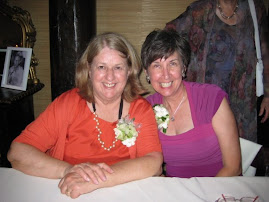
It’s been a few weeks since I first introduced my fitness plan and I thought I should demonstrate some accountability to my readers and to myself and talk about what progress I have made so far. (No, that's not me in the picture. I wish it were!)

First of all, since January 1, I have been much more faithful about going to the gym. My goal is three times a week but I don’t always make my goal. Today I walked 2 miles on the treadmill in about 32 minutes. I had to work back up to this pace because it had been so long since I did any brisk walking. At my current pace walking about 3.8 miles per hour, I burned 170 calories in that 32 minute span of time. I also use the muscle strengthening machines each time I go to the Y. In about 20 minutes, I can hit 8 machines—biceps, triceps, abdomen, lower back, shoulders, thighs, etc. This puts my total time at the Y at just under one hour.

For those of you who are a bit timid about going to the gym, here are a few side comments. At my local YMCA, the best time to go to use the exercise equipment, i.e., the time when the gym is the least busy, is around the lunch hour on a week-day. There are people at every level of fitness who are working on any number of fitness goals. There is always a trainer present who can answer any questions you have. Despite what I used to imagine, no one is really looking at me when I am doing my exercises. I used to feel a little self-conscious, but I got over it.

So, what do I get for my efforts? Have I lost tons of weight and am I now planning on entering a body-building contest? That is hardly the point. I think I’ve dropped one pound. But, more importantly, my energy level is markedly higher and my muscles are definitely more toned than they were. I know that I am sleeping better at night.

The most important criteria for judging the ultimate value of the exercise and food monitoring strategy that I have begun is to ask myself “How do I feel?” For me, the answer is a definite “I feel good!” I fell better physically and I feel better about myself because I am sticking to my goals.

Just to recap—I’m a 63-year old woman who has never been a particularly athletic type of person. I just want to feel good and look my best. If I can do it, so can you. Go back and revisit the previous post which talked about the prevention of Alzheimer’s and the book by John Ratey. My favorite quote from John Ratey is the following: "Going out for a run is like a little Prozac and Ritalin. We feel more focused, calm and motivated afterward. The more activity you are doing, the less cognitive decline."

Tuesday, January 12, 2010

Getting Fit (part 2)


Yesterday I made the greatest discovery. Recently I purchased an Iphone--which has much more information than I really need. My daughter-in-law very nicely explained to me the different "apps" that are free. I found one for free NPR podcasts (to listen to while I am on the treadmill at the Y) and another that will help me locate restaurants in any town I might visit in the US (Urbanspoon.) Today I went surfing to see if there was an application to help me track my intake of food each day. And voila! There it was. It is a website that will supposedly sync with my computer. The name of the site is http://www.myfitnesspal.com/.


Several years ago, when I first started noticing the pounds (and inches) creeping up on me (around the age of 48 I think), I started a log of all the foods I ate. Then, I took it one step further and bought several books which gave the number of calories and fat grams in just about any food that I could possibly ingest. It was a lot of trouble at first but it was amazing how just having to write down everything I ate or drank made me so much more aware of how much food I was consuming every day. And then when I started counting up the fat grams, I suddenly became very smart about certain foods that just ooze with butter and fats. One of the foods that I have not touched since I started my own personal campaign against fats is croissants. Never, ever order a sandwich that is on a croissant. Instead, order whole wheat bread. You lose the fat and you gain the fiber. I call that a win-win situation.


This new way of tracking calories will be so much easier. All I have to do is type in, for example, Ocean Spray Cranberry-Apple Juice or 2% fat milk. The computer looks it up and tells me how many calories, carbs, and fat grams there are in whatever amount of juice or milk I drank that day. I mean, this is going to be so easy. Finally an "app" that is totally beneficial to me. You can also keep track of how much exercise you do every day. The reason why it will be helpful to have access to this information on my Iphone is for occasions when I am dining out and need some quick information to help me make my menu selections. (How's that for justifying the purchase?) Typing in all that food information is a little tedious on the smaller Iphone, so I'll probably do that part of the recond-keeping from home on my PC.


So, now that we know that exercise is good for us, not only physically but mentally, and now that we have a way to help us track our consumption of food and to increase our awareness of just what we are eating, we have begun to make strides in the never-ending campaign for better physical health and wellness. Why don't you try it with me! Or share with me your success stories and strategies for staying fit.


Again, the site is http://www.myfitnesspal.com/

Sunday, January 10, 2010

Resolved: To Improve a Poor Track Record


New Year’s Greetings to all readers of this blog.

Today, January 10, 2010, I went back to the gym after an absence of four months. Does this story sound familiar? YMCA membership for ten years: Average actual use of YMCA-- approximately ten hours per year. In other words, some years, I’m a real go-getter and I go multiple times a week; I use the treadmill; the weight machines; take an aerobics class. Then there are the years where I don’t step foot inside the gym. That’s my “track record” with formal physical exercise. If I include those other activities in life which work off calories and build body muscle, such as gardening, vacuuming, or walking my dog, my score would improve somewhat but nothing to put me in the boot camp category. My motivation to exercise comes and goes, according to what else is going on in my life.

The journals are full of articles about how we can retain our cognitive functions, most recently in Time magazine, Jan 18, 2010, “Workouts For Your Brain,” by Bonnie Rochman. I’ve been doing the cross-word puzzles for about ten years. My friends are doing their daily Sudokus. I know folks who are studying a foreign language. Well, the data tell us that in addition to activities like those I just mentioned, two of the most important things one should be doing to remain at top cognitive functioning are to engage in physical activity and to remain socially active.

Isn’t that a nice prescription for mental and physical wellness? Take a walk every day and go out with your friends at least three times a week. How hard is that?


According to the website for Alzheimer’s Prevention, “exercise strengthens the pumping force of your heart, increases blood flow to your brain, increases exercise tolerance, reduces body weight, lowers blood pressure, reduces bad cholesterol (both LDL and total), increases good cholesterol (HDL), and increases insulin sensitivity, all of which enhance health and reduce the risk for diseases that can affect brain functioning, such as cardiovascular conditions.” http://alzheimers.about.com/od/prevention/f/physexercise.htm


John Ratey, MD., author of Spark: The Revolutionary New Science of Exercise and the Brain, tells us that exercise stimulates our gray matter to produce “Miracle-Gro for the brain.” If ever I needed to find an excuse for exercising—this is the best one yet. If research shows that people who exercise regularly are less likely to fall victim to dementia and Alzheimers Disease, what more can anyone say to encourage you and me to get out there and walk on the treadmill, or walk the neighborhood with friends, or lift those free weights that have been sitting idle for two years? Just 30 minutes a day is all it takes. After watching the movie Iris last night about Iris Murdoch’s struggle with Alzheimer’s, I know that I would sure like to try some preventive tactics.

One more quote from John Ratey: "Going out for a run is like a little Prozac and Ritalin. We feel more focused, calm and motivated afterward. The more activity you are doing, the less cognitive decline." Quoted by Simon Usborne on John Ratey website, article “Third Age: Health and Wellness.” http://johnratey.typepad.com/blog/2008/04/third-age-healt.html

Wednesday, November 25, 2009

Response to Time-Management Comment


In a recent comment, a reader observed that the way we spend our time is a direct reflection of our priorities in life.


I agree whole-heartedly. It's the same thing with our checkbooks. A long time ago a wise person told me that you can look at the entries in a check register / or on an on-line bank statement and tell what a person's priorities are. Scary thought, isn't it? I am trying to be deliberate about choosing how I spend my time as well as my money instead of letting everyone else choose for me. But it's easy to get caught up in the day to day rush and to forget to stop and ask--is this really what I am meant to be doing now?


For example, you will notice that there have been fewer entries on my blog recently. I have gotten drawn into other activities, most of which are what I consider worth-while: helping my sister with a project; preparing for Thanksgiving; serving on a committee in a community-service organization. However, choosing to participate in these activities took me away from my focus and I temporarily lost my drive to write. In some ways I resent that. Does that mean I am being selfish? I have read comments from writers indicating that writing is a solitary and seemingly selfish passion. This aspect of writing would be at odds with who I am as a person.


Right now I have an opportunity to go back to work for a part time job and I am torn. I feel like I haven't had enough of my ME time yet. The minute I go back to work, I will stop focusing on my writing, my reading, my exercising--all of which have been so important for me. I know myself well enough to know that I will throw myself into the job and everything else will become secondary. But wouldn't it be nice to have a few extra thousand dollars to allow me to take a trip next summer? I am wrestling with this dilemma. It has always been hard for me to pass up an opportunity. Any suggestions out there?

Monday, October 19, 2009

Valuing the journey as well as the destination OR "What do the ideas of time management and sailing have in common?"

In my last two postings, I expressed frustration over the fact that I haven’t made any demonstrable progress in reaching my dream goal for retirement, i.e., writing a book. For today, I think instead of beating myself up for not making the progress that I would like to have made, I need to take a more positive approach and look at what I have accomplished since June 30, 2008, the date of my retirement. I also need to get real about how I want to live my life. Again, I return to the question: What does it take for me to feel that I am living a fulfilling, meaningful, life?

To review, my initial goals for retirement were to engage in activities that challenged me cognitively, physically and socially. I also included the concept of “engagement” in a cause that is bigger than myself as being necessary to keep me focused and centered. I am very satisfied with my involvement in book study groups that I have joined. They are providing me with both cognitive challenges and social opportunities and I have been thankful for this new opportunity to share and discuss literature. I even served as facilitator at the latest one on John Updike’s Terrorist. The session was a good one and it was clear that my skills as a meeting facilitator, learned and cultivated through many years of leading teacher study groups, combined with my passion for John Updike produced an environment where everyone was comfortable and felt empowered to speak up to share their reactions. I was on a high. I felt I was in my element. What does this tell me about myself?

I have made progress on my exercise / physical fitness goals. In terms that can be measured, I have managed to shed a few pounds and have firmed up important muscle groups. I am able to execute the first basic form of Tai Chi. I continue to remain informed about nutrition and take deliberate steps to buy and consume only those foods which are rich in nutrients (and which my son the nutritionist would approve of.) In addition to my book study groups, I have other outlets for social engagement and volunteerism which keep me involved with friends and provide an emotional support system.

My commitment to reading groups as my primary vehicle for the pursuit of cognitive challenges derives from two underlying desires, the first being to rediscover the pure joy of sitting down with a good book and entering that other world inhabited by people and situations which reveal universal themes that I can relate to. This is where I find so much real pleasure. Time spent in reading is always time well spent. I am continually learning and growing when I read.

The second reason for my determination to be an active participant in my book study groups is to provide myself with an avenue for learning more about what makes good literature. I want to read for pleasure—and then some. I want to read so that I can learn how to write. In that regard, in addition to reading novels, I have researched the writing process and the publishing industry. I love that classic adage written on the classroom walls in 90% of the schools in the division where I worked for 14 years: first learn to read; then read to learn. After all those years of reading to learn how to be a better teacher / how to be a better leader / how to collect and use data to improve instruction, I am now reading to learn how to be a writer. What a treat!

I have always been somewhat impulsive and impatient about things that I really want to accomplish. I am susceptible to severe cases of tunnel vision and am able to block out everything that doesn’t directly relate to my goals. Maybe I need to rethink my attitude about where I’ve been and what I’ve been doing. Haven’t I been working toward my goal of writing a book by reading and discussing what I’ve read? All of the book studies that I have donehave in fact been leading me up to the point where I will be better prepared to take the first critical steps of writing.

As retirees, when we set goals for ourselves, it doesn’t mean that they have to all be accomplished by tomorrow—or by next week—or next month. There is no reason to be as driven as we were when we were working. Instead, what we have identified as goals should serve as a sort of compass, a general direction that we want to follow.

To borrow some sailing metaphors from a dear friend, let’s imagine that we are cruising on our sailboat, and we have plotted a general course which will lead to our ultimate destination. Does that mean that we can’t take an occasional side trip to explore a newly discovered cove or marina? Or that we can’t just stop for a day, drop anchor, and enjoy the air, the sun and the water? Aren’t we supposed to enjoy the actual journey? I learned long ago that success and happiness are not measured by being the first to cross the finish line. Success and happiness are measured by how well we live every day and by enjoying the ride every minute as we steer toward our desired destination. For me, this credo should translate into turning every moment that I may perceive as a “distraction” from my long term goal of writing a book, e.g., activities such as meeting friends for lunch or going to the gym, into moments and incidents which will in the long run enrich my life and also broaden my perspective. This is indeed the gift that retirement offers.

Friday, October 16, 2009

Time Management Part 2


Here are all the items on my to-do list:

--Finish weeding the garden
--Call the man who helps with occasional garden tasks
to schedule the work to cut back ivy and to prune shrubs
--Vacuum the floors in the house and mop up all the spots
where my dog has either slobbered or piddled on the
hard wood floors
--Grocery shop
--Write five sympathy cards
--Finish reading the Sunday Washington Post
--Begin the photo album from my son’s wedding
--Begin the Sister City picture scrapbook for 2009
--Go to Ritz camera to develop pictures for above scrapbooks
--Organize all the digital picture files on my computer
--Read the camera manual for my new digital camera
in preparation for the digital photography class I have
signed up for on October 24

Well, as much as I like to think of myself as a free spirit, I do still have a need for some order and structure in my life. Otherwise, why would I even have a “to-do”list? I like a neat, clean house and an attractive well-kept yard. I like to have healthy food on hand in my house so that I’m not tempted to snack on unhealthy foods. I am aware that I need to keep myself active socially so that I don’t become a complete hermit. As much as I’d like to just sit on my couch and watch old movies all day long, I know that it is not in my best interest to do so.

As I write this list, it becomes clear to me that some of these tasks are the long-term variety (e.g., the photo albums) and some are the one-time, get it done now variety (e.g. vacuum the floors). So, which ones should I tackle today? Do any of them really matter to anyone other than myself? Maybe I need two lists: One for the long-term tasks that need to be worked on in stages and another for the short-term, one time tasks.

Maybe it would be helpful for me to have some criteria to help me decide which are the jobs that need to be done now and which ones can wait? For example, have I considered the following?


Does this task and its completion affect anyone other than myself? Will I be letting someone down?

Have I done my share of physical activity this week? Am I due for a date with the treadmill at the YMCA?

Have I thought about my loved ones or about those who I don’t know personally but whose lives might be improved or made more cheerful by a visit or a personal note or participation in a volunteer activity from me? (What about those five sympathy cards that are sitting on my desk and haven’t been written / mailed yet?)

How will I feel at the end of the day if I do (or do not) complete this chore? Will I feel really satisfied? How much satisfaction does this particular obligation provide me anyway? Do I really need to serve on that committee? Am I over-obligated?

What have I done for myself lately? What have I done for others?

For today, just by asking myself these questions, I see that I really ought to get out those sympathy cards. Of all the jobs I have already procrastinated on, that is one job that could make a small difference in the life of a grieving friend. So maybe that’s the one to start with. And on the way to buy / mail the cards, I can stop at the grocery store for the few items I need in order to keep a healthy, well-balanced food pantry in my house. The remaining items don’t seem as pressing. Well—at least I got through this one day. Tomorrow, I’ll do a re-evaluation and start the process all over again.

Time Management


True / False
Retirees have no problems with time management.

How did you answer this question?
Let’s analyze the statement.


The answer must be True, right? How can anyone who is retired have problems with time management? As a retiree, I now have more free time than I have ever had in all of the 63 years of my life. I can set my own schedule every day. I don’t have anyone else’s expectations to meet on a daily basis. I am the master of my castle; the captain of my ship. How could there be any problems with time management?

In all truthfulness, for me, the answer to this question is False. This issue of time management has been an unexpected challenge for me as a retiree. With all this new-found free time, suddenly the immediate priorities are no longer as clear as they were when I was working 40 + hours per week. In my prior life as a professional working woman, if the only time I had free to do yard work was on the weekend, that’s when I did it. When the time was limited, the choices for how to spend it were easier and more obvious. I am still in awe of myself when I remember how much I used to accomplish on one day of a weekend when I was working and had young children. In one Saturday I would get up early, go to the grocery store; return home by 10 a.m. to take my boys to a soccer game; return home again and prepare lunch for everyone; work in the yard or do laundry in the afternoon; cook dinner and maybe even go out with a group of friends for a few hours in the evening. Sundays were full of church, Sunday School, family dinner, taking the boys to a park or a museum, preparing lesson plans and grading papers.

Heck, these days, I’m lucky if I am even up and dressed by 10:00 a.m. especially now that the weather is turning colder and the temptation to stay in my warm, cozy bed is so hard to resist. It’s very easy to get drawn into the momentary pleasures of my day to day existence and to prolong the time I spend on them. It’s equally easy to put off tasks that may be on my daily checklist. (Wait till I show you my checklist—remember I said I am a type A personality?) After all, there are no deadlines to meet; no one other than myself cares if this or that job gets completed or not. In fact, isn’t this one of the rewards of retirement? Why am I even worrying about this? As I said, who cares if certain jobs do or do not get done?

If you had asked me about time management one year ago, I would have told you that you were crazy for even asking the question. Time management was not an issue for me because, as I happily told my friends when they asked me what I was planning to do in my retirement, my sole purpose in retirement was to do “whatever I damn well please.” I went blissfully from one activity to the next. I had rid my life of all the “shoulds” and was only concerning myself with what felt right for the moment. Now that I am entering the second year of my retirement, surprisingly I find that I am getting a little frustrated with myself because I have so much trouble making up my mind about how to spend the day. Some days there are multiple things that I want to do but I can’t decide which one to do first. And then there have been a few evenings when I have asked myself, What have you accomplished today? What about that novel that you said you were going to write when you retired? I am reminded that the greatest gift of retirement is time and that the gift of time is precious. What do I have to show for my time?

Let me give you an example. I am looking at my calendar for October. Instead of nice clean empty squares for the 31 days of this month, my calendar is riddled with activities such as the following: foot doctor appointment for me; mammogram for me; flu shot and shingles shot for me; grooming appointment and rabies shot for my dog; lunch date with a friend; Elder Study classes or curriculum meetings; book study groups; exercise classes; walking dates with friends; a digital photography class; wine-tasting with Sister City; visiting my niece and her new baby; serving dinner at the Homeless Shelter; and appointments for minor home repairs. It’s like an average of one event per day.
This is all good stuff; these are activities I signed up for and that I can cancel if I don’t want to attend on any given day. Many of these are activities that I would not have had time for prior to my retirement. But where is that long span of uninterrupted time when I can seriously tackle starting to write a chapter for my book? Am I “nickleing and diming” myself instead of saving up precious energy and time for the big, important things?

Any suggestions out there on time management? What does your calendar look like?